
Diane Coleman: Our Founder
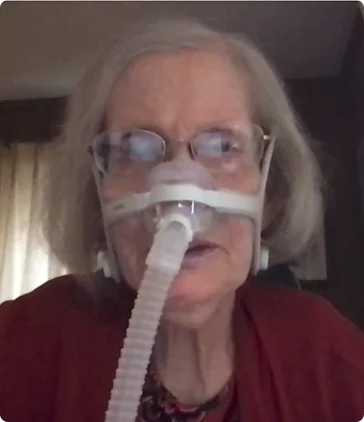
Diane Coleman, the founder of Not Dead Yet, exemplified commitment and service. For more than 40 years, Diane championed the idea that disabled lives are worth living. She did this in part by fighting every day against law and policy that ends peoples’ lives just because they are disabled. Not Dead Yet is built on the bedrock of her legacy.
Proud Beginnings
Diane was born in 1953 and was diagnosed with a form of muscular dystrophy, later identified as spinal muscular atrophy. Back then, doctors believed that Diane wouldn’t live past childhood. They – like many other people – underestimated Diane Coleman. Instead, Diane went on to graduate as valedictorian from her high school and, in 1981, earned a joint J.D. – M.B.A.
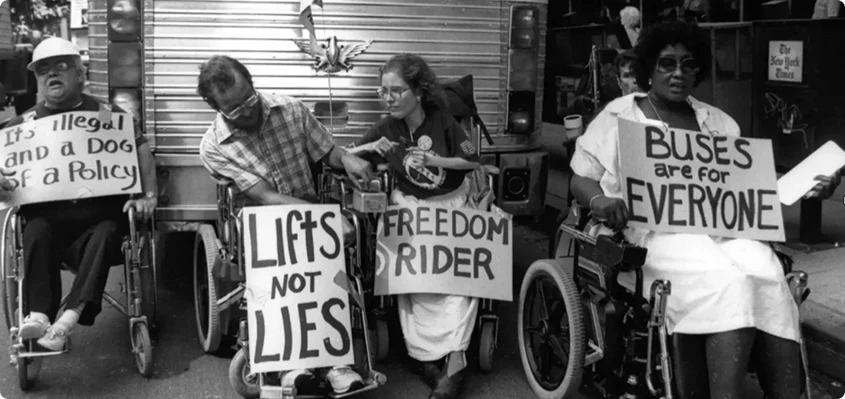
Diane began her career as an attorney, and five years later, founded a chapter of ADAPT in 1987. She participated in many of the disability rights protests of the era just prior to the passage of the Americans with Disabilities Act. She was arrested more than twenty-five times, demanding accountability from our nation’s elected representatives.
To describe just one of her many actions, in 1994, after the passage of the ADA, Diane marched with ADAPT and 2,500 disability rights activists to ensure that President Bill Clinton’s universal health care plan (as directed primarily by Hillary Clinton) included personal assistance services directed by people with disabilities themselves. ADAPT, in Diane’s own words:
“ADAPT’s strategy began with the unprecedented step of simultaneously taking over the party headquarters of the Democratic and Republican National Committees … Gingrich … acknowledged that if we had not come up to see him that day, “it might not have gotten my attention.” This ultimately led to his introduction of the first MiCASA [Medicaid Community Attendant Services and Supports Act].”
Diane’s forward-thinking advocacy always produced change in the hearts of people around her.
The Beginning of Not Dead Yet
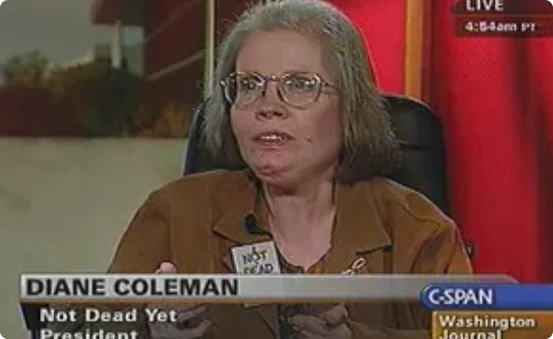
Not Dead Yet’s beginnings are rooted in a social climate which treated people with disabilities’ lives as worthless. The difficulty in getting care or services was frequently used as a justification for murder or suicide. To quote Diane:
“ … there were converging forces. One area is known as the Baby Doe cases, which involved newborns with spina bifida or Down’s Syndrome. It was found out that they were being starved to death or denied routine medical care after they were born … produced regulations called the Baby Doe Amendments. At about the same time there were other cases happening … One of these involved … Elizabeth Bouvais … She checked herself into a hospital to try to starve herself to death … and the media, and the press, and the judges, and most of the community, and the medical people, even, tended to agree. To say that, ‘Yes, she should want to die because of her disability, and we should help her.’”
Dealer of death Dr. Jack Kevorkian was active at around the same time. His cruel devaluing of human life was another reason Diane decided to form Not Dead Yet. To quote Diane: “As before, the difficulties disabled individuals faced in living – community access, getting a job, getting married – were not considered, or worse, accepted as rationales for ending their lives.”
Diane saw that few people were attempting to prevent these deaths. Few people cared. But the disability rights community did care. They would show up:
- To protest the deaths
- At committee and legislative hearings to testify
- Writing court briefs, news articles, and opinion pieces
The disability rights community also showed up for what Diane Coleman called the “Give me liberty or give me death cases,” where people with disabilities were being offered death but not the medical supports needed for life.
Diane, clear-eyed, saw a need for a “group similar to ADAPT to take the issue to the streets.” And that was the birth of Not Dead Yet, founded in 1996.
Decades of Advocacy on the Value of Disabled Lives
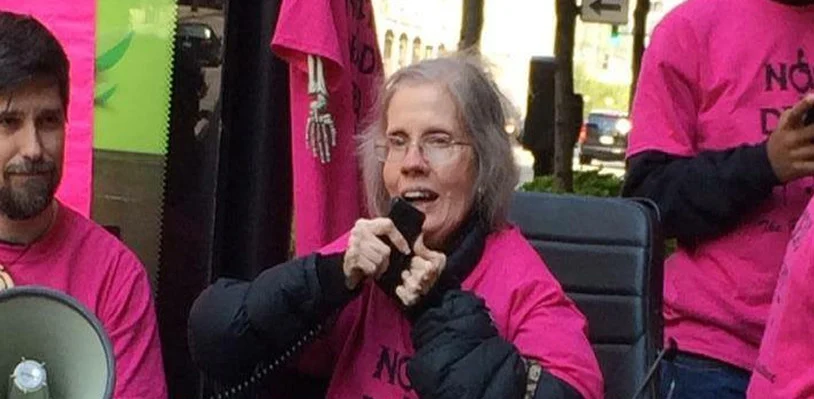
Diane never quit. We are grateful for that, because public opinion has been slow to shift. Even today, just as she once said in a hearing in 1996,
“disability-based discrimination in this culture is deep-seated, virtually unconscious, pervasive, and overwhelming.”
That said, Diane’s strenuous advocacy made a far greater number people aware of assisted suicide’s threat to disabled lives and prevented untold harm.
Among her most important actions as Founder of Not Dead Yet:
- Diane wrote the first draft of the National Council on Disability’s position statement on assisted suicide. Her pioneering work for NCD, “Assisted Suicide: A Disability Perspective,” informed NCD’s (and continuous) position against assisted suicide for years to come.
- Diane Coleman was one of the earliest advocates against the ableist philosophy of Peter Singer. Diane had deeply principled objections to Singer’s cruel moral calculus, calling him “a public advocate of genocide and the most dangerous man on Earth.” One of the most famous disability-specific critiques and analyses of the influential philosopher, Harriet McBride’s “Unspeakable Conversations,” was provided by a member of Not Dead Yet.
- Diane refused to allow assisted suicide and euthanasia to be considered without including the perspective of the disability rights community. Diane testified at Congressional committee hearings and federal and Supreme Court cases. She submitted amicus briefs and spoke passionately before both the public media and in private hearings. Because of her, the world knows at least a little about our ongoing cause.
- Diane gathered almost all of the support Not Dead Yet has from national nonprofits. Thanks to her, and as she famously said: every national disability rights specific organization with a position on assisted suicide laws opposes assisted suicide laws, and not one supports them.
- Diane as founder of Not Dead Yet led protests against a variety of toxic ideas that devalued disabled lives, not just assisted suicide and euthanasia. Diane protested against the use of Quality-Adjusted Life Years (a health economic metric that devalues life with a disability), medical futility determinations, and other forms of medical discrimination.
The Disability Rights Community Owes An Unpayable Debt to Diane
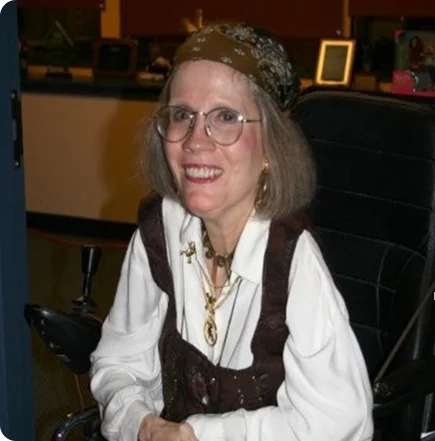
Diane died at the age of 71, celebrated by her colleagues and after a life far longer and more fulfilling than any doctor said she would have. It was defined by her own courage and choices.
Donate to the Cause
To make a donation to the cause Diane Coleman spent so much of her life fighting for, in her name.
Make a Donation1. Clay Risen, Diane Coleman, Fierce Foe of the Right-to-Die Movement, Dies at 71, N.Y. Times, Nov. 20, 2024, https://www.nytimes.com/2024/11/20/us/diane-coleman-dead.html?eafs_enabled=false.
2. Id.
3. Ctr. for Disability Rts. Inc., Remembering Diane Coleman, https://cdrnys.org/blog/uncategorized/remembering-diane-coleman/ (last visited Aug. 11, 2026).
4. Nat’l Council on Disability, NCD Remembers Diane Coleman (Nov. 19, 2024), https://www.ncd.gov/2024/11/19/ncd-remembers-diane-coleman/; Clay Risen, Diane Coleman, Fierce Foe, N.Y. Times, https://www.nytimes.com/2024/11/20/us/diane-coleman-dead.html?eafs_enabled=false.
5. Clay Risen, Diane Coleman, Fierce Foe, N.Y. Times, https://www.nytimes.com/2024/11/20/us/diane-coleman-dead.html?eafs_enabled=false.
6. ADAPT, 1996 -Washington – Diane Coleman, https://adapt.org/1994-washington-diane-coleman/ (last visited August 7, 2026).
7. Id.
8. It’s Our Story, Diane Coleman, part 01 of 18: “The History and Purpose of Not Dead Yet”, Youtube (Jun. 22, 2010), https://www.youtube.com/watch?v=T7rBmQQA38w.
9. Diane Coleman, Why Disability Rights Groups Oppose Assisted Suicide, CDRNY (blog), https://cdrnys.org/assisted-suicide-blogs/ (last Visited Aug. 11, 2026).
10. It’s Our Story, Diane Coleman, Youtube, https://www.youtube.com/watch?v=T7rBmQQA38w.
11. Id.
12. Diane Coleman, Hearing before the H. Jud. Comm. on Assisted Suicide, 104th Cong., https://www.c-span.org/program/house-committee/assisted-suicide-issues/55880 (Apr. 29, 1996).
13. Nat’l Council on Disability, NCD Remembers Diane Coleman (Nov. 19, 2024), https://www.ncd.gov/2024/11/19/ncd-remembers-diane-coleman/.
14. Jules Good, In Memoriam: Diane Coleman, Not Dead Yet (Nov. 6, 2024) https://notdeadyet.org/in-memoriam-diane-coleman/